
What does an EPC tell you?
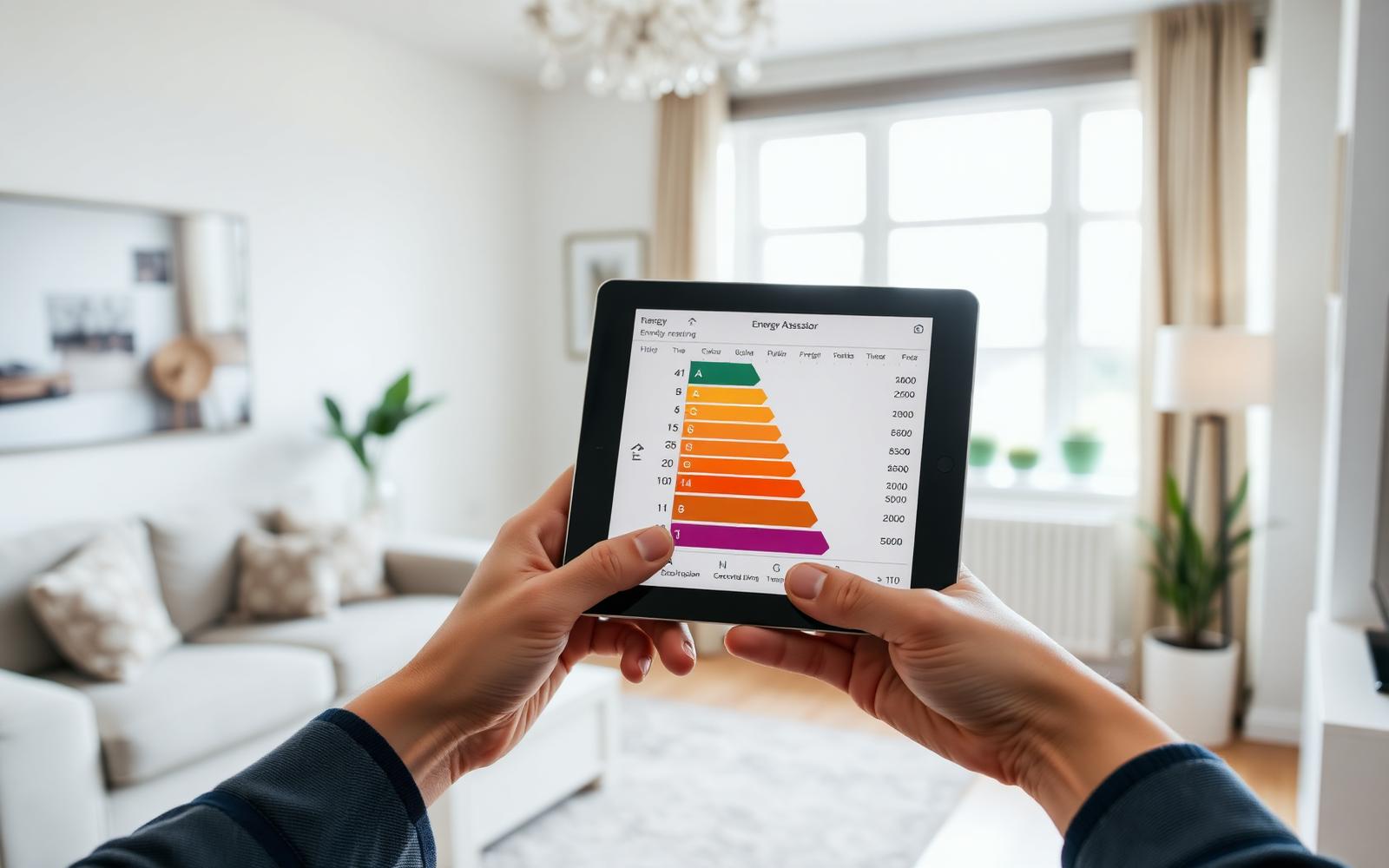
An Energy Performance Certificate (EPC) shows how energy efficient a home is. It gives the property a rating on an A–G scale, alongside a report listing measures that could improve that rating.
Importantly, an EPC is a standardised assessment. It uses set occupancy and heating-pattern assumptions so that one home can be compared fairly with another — it is not a measurement of how much energy the current occupier actually uses. Two households living very differently in identical flats would still receive the same rating.
A is the most energy efficient. Ratings are calculated from a score out of 100.
- A92+
- B81–91
- C69–80
- D55–68
- E39–54
- F21–38
- G1–20
Illustrative scale. Your rating is produced by the approved assessment methodology using the data collected at your property.
What do the A–G ratings mean?
The assessment produces a score out of 100, which falls into a band. A and B are the most efficient bands and are usually seen in newer or heavily upgraded homes. Much of Edinburgh's pre-1919 tenement and period stock sits in the D–E range because of solid stone walls and original glazing.
A lower band is not a fault — it reflects how the building was built. Your certificate's recommendation report is where the improvement options appear.
When do you need an EPC?
In Scotland an EPC is required when a property is sold or let, and it must be available to prospective buyers or tenants. Landlords also use EPCs to evidence the energy performance of a property, and many funding or improvement schemes ask to see a current certificate.
If you are simply curious about your home's performance — or planning improvements — you can have an assessment carried out at any time. See fixed prices or book online.
How long does an EPC last?
An EPC is valid for ten years. You can commission a new one sooner — for example after insulation, glazing or heating upgrades — so the certificate reflects the current condition of the property.
What does the assessor look at?
During the visit a Domestic Energy Assessor records the property's physical characteristics. That includes property type, age, dimensions, floors and storeys, glazing, construction, insulation, heating systems and controls, hot water provision, fuel types and any relevant technologies such as solar PV or heat pumps.
Dimensions
Room, floor and external dimensions, storeys and floor levels.
Construction
Wall, floor and roof construction and property age band.
Insulation
Loft, wall and other insulation where visible or evidenced.
Glazing
Window types, glazing and, under RdSAP 10, window measurements.
Heating
Main and secondary heating, fuel type and efficiency data.
Controls
Thermostats, programmers and heating control arrangements.
Hot water
Hot water source, cylinders and any insulation to them.
Technologies
Relevant technologies such as solar PV, batteries or heat pumps.
Evidence
Photographs and documentary evidence supporting the record.
Next steps
Read what happens during an assessment, then run through the short preparation checklist before your visit.